
link to Aaron Levie and Matthew Berman interview: https://www.youtube.com/watch?v=CLC1j5i44ZA
1 | Why timing, not just intent, matters
Levie is right that full autonomy will take years and that “humans‑in‑the‑loop” will dominate for the foreseeable future.(canadiantechnologymagazine.com)
Yet surveys show that many boards are already treating 2025‑2027 as a window for quick efficiency gains:
-
40 % of large employers expect to reduce head‑count because generative AI can automate tasks.(weforum.org)
-
In Japan, 53 % of firms adopting AI list “labour‑cost reduction” as a primary goal (only 36 % cite innovation).(reuters.com)
-
Even the largest tech vendors are trimming: Microsoft’s July 2025 lay‑offs (≈4 % of staff) were framed explicitly as a way to “fund hefty AI bets.”(reuters.com)
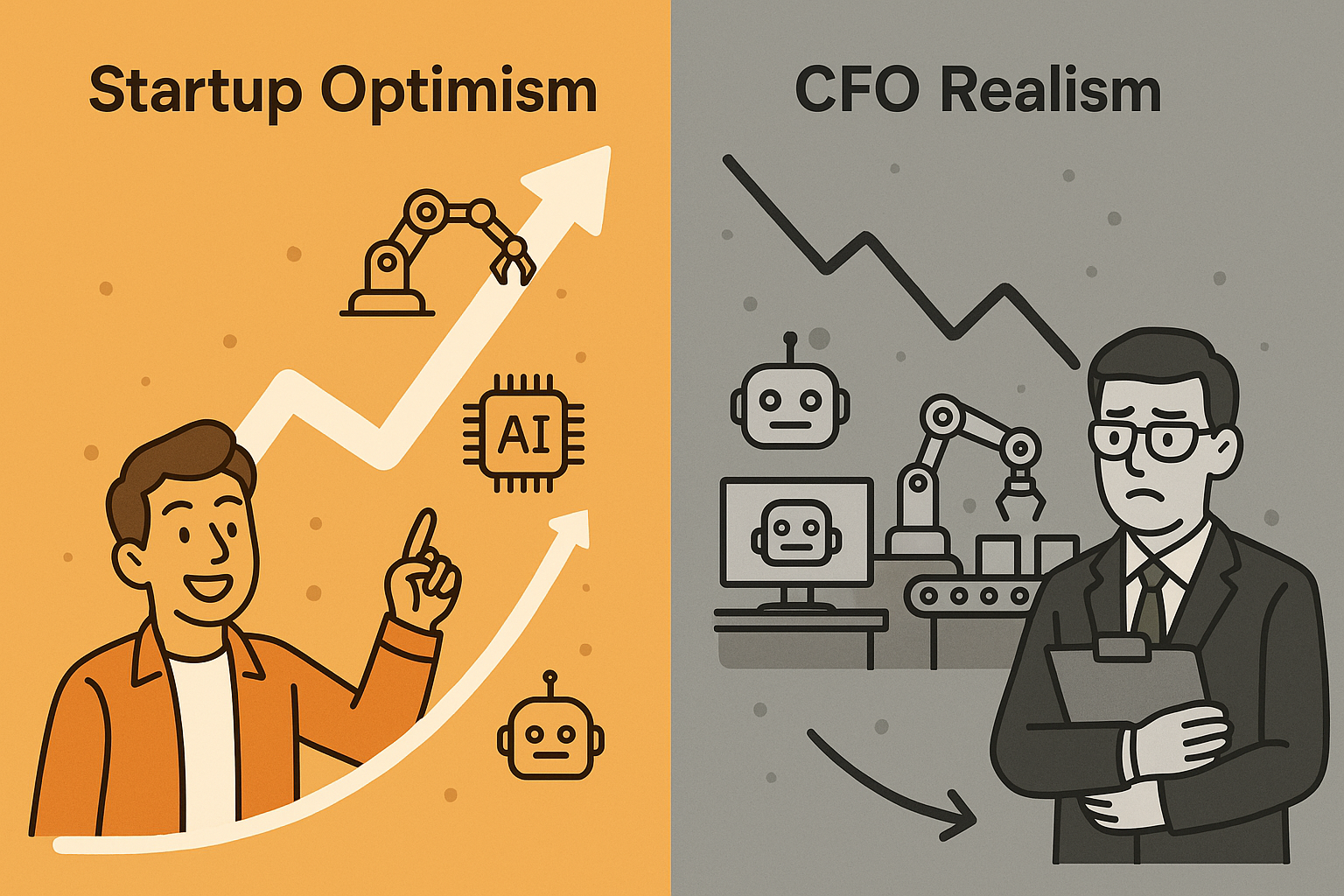
Those data points confirm a pattern we have seen in every previous technology cycle: the CFO moves before the CTO.
2 | Three overlapping waves of adoption
| Wave & window | Dominant sponsor | Typical KPI | Likely labour effect |
|---|---|---|---|
| Wave 1 2025‑2027 | CFO / COO | Cost per transaction, SG&A as % of revenue | Net negative hiring. Redundant white‑collar roles cut, contractors substituted where flexibility is needed. |
| Wave 2 2027‑2030 | Business‑unit VPs | Time‑to‑market, product proliferation | Mixed: head‑count flat, mix shifts to “AI supervisors,” prompt engineers, process owners. |
| Wave 3 2030‑on | CEO / Strategy | New revenue lines, market share in “agentic” verticals | Net positive in aggregate, but concentrated in firms that mastered Wave 2. |
Why Wave 1 will feel ruthless
The tools that are most mature today—code copilots, marketing‑content generators, LLM‑powered chat deflection, document summarization—map neatly onto high‑volume, repeatable knowledge tasks. Those are also the tasks that managers can quantify and cut fastest. Expect broad‑based reductions similar to Microsoft’s but across insurance operations, accounting shops, call‑centre outsourcing, and shared‑service centres.
Why Wave 2 changes the conversation
By 2028 the capability frontier (multi‑modal reasoning, better planning, smaller bespoke models) will allow mid‑market manufacturers, hospitals and utilities—firms with thin margins and limited IT staff—to re‑design processes, not just prune them. Head‑count may stabilize, but the skills mix will be unrecognisable.
Why Wave 3 gives rise to “agentic enterprises”
Once organisations have both the technical plumbing (secure data layers, RAG pipelines) and the managerial muscle memory, entire lines of business can be handed to software agents. At that point growth rather than savings becomes the strategic lever. Levie’s “AI‑first” vision plays out here—but reaching it demands that companies survive the dislocation of Waves 1 and 2.
3 | Sector dynamics: tech vs. everyone else
Levie’s examples come from a cloud‑native vendor where:
-
Digital exhaust is abundant and well‑labelled.
-
Software release cycles are measured in hours.
-
Cultural acceptance of experimental tooling is high.
Most industrial, retail, logistics and public‑sector organisations face the opposite conditions. Their near‑term economic incentive is therefore to:
-
Automate the routinised, legacy workflows (invoice matching, compliance checks, basic forecasting).
-
Retrench or off‑shore roles whose main value proposition was low‑skill grunt work.
-
Only then test AI for higher‑order tasks—once cost savings have funded the experimentation budget.
That “cut first, re‑invent later” sequencing explains why the optimistic scenarios in Berman’s interview can look idealistic from a factory floor or regional bank boardroom.
4 | What this means for workers and policy‑makers
-
Entry‑level white‑collar roles are the shock absorber. The World Economic Forum flags entry‑level sales, research and clerical roles as the most exposed—and they are disappearing fastest.(weforum.org)
-
Retraining has to start before cuts, not after. Waves 1‑2 will generate demand for AI‑literate supervisors, data‑quality stewards and integration engineers, but only if up‑skilling budgets keep pace with attrition.
-
Labour‑market fluidity will cushion the blow—second‑mover firms can hire experienced talent shed by the pioneers, echoing the Financial Times’ argument that a measured approach can pay off.(ft.com)
-
Regulators will be pressed to act on displacement. Expect proposals for portable benefits, mandatory retraining funds, and transparency rules forcing companies to disclose AI‑related job impacts alongside financial results.
5 | Take‑aways for executives
-
Model the three‑wave path explicitly. Align capital allocation, workforce planning and product road‑maps with the cadence above.
-
Quantify “cost to keep humans in the loop.” That is the hidden line item that determines whether Wave 1 savings materialise.
-
Prepare culture for continuous redesign. AI capability will double several times this decade; org charts must be treated as living artefacts.
-
Invest in trust layers now. The sooner you bolt audit‑ability, provenance and policy management onto your AI stack, the less painful regulatory compliance will be in Wave 3.
Bottom line
Levie’s thesis—that AI is ultimately a capability accelerator—may well prove true. But history suggests the path to that future begins with a brutal accounting exercise in non‑tech sectors: “How many people can we do without next quarter?” Recognising that timing gap is essential if we want the long‑run gains without sleep‑walking through a near‑term employment shock.
Comments powered by CComment