
- Details
- Written by: peoplemachine
- Category: AI / Technology
- Hits: 748
There is a particular species of question that politicians love and engineers hate. It goes like this: Should we sell AI chips to China, yes or no? And the person asking it fully expects one of those two words in return, because the person asking it has already decided which word they want to hear. The question is not a question. It is a sorting hat.
Jensen Huang, CEO of Nvidia and arguably the single most consequential figure in the global AI supply chain, sat down this week with Dwarkesh Patel for a podcast that ran nearly two hours. Most of the conversation covered familiar Nvidia territory: supply chain choreography, TPU competition, why Nvidia does not become a hyperscaler. Good stuff. Solid corporate reasoning from a man who has turned electron-to-token conversion into a hundred-billion-dollar quarterly business.
But then they got to China. And things got interesting.
Read more: The False Binary: Jensen Huang, the Chip Wars, and the Lie of All or Nothing
Write comment (0 Comments)- Details
- Written by: peoplemachine
- Category: AI / Technology
- Hits: 645
The Last Unfair Advantage: Enterprise Intelligence in an Age When Every Tool Is Equal
When artificial intelligence hands your competitor the same superpowers it handed you, the only thing left is what you actually know. And most organizations have no idea what that is.

Sometime in the next few years, the AI your company uses will be roughly as good as the AI your fiercest competitor uses. Same models, same token limits, same multimodal tricks. The democratization of intelligence tools is not a metaphor. It is a deadline. And most organizations are going to miss it.
There is a scene in the book of Proverbs that almost nobody frames as a business strategy treatise, but maybe they should. "By wisdom a house is built, and through understanding it is established; through knowledge its rooms are filled with rare and beautiful treasures" (Proverbs 24:3-4). The ancient observation is this: the house is not the treasure. What fills it is. The structure you build, no matter how impressive its facade, derives its worth from what is stored inside. Your enterprise is a house. And inside are treasures most of your leadership team could not locate on a map.
This article is about those treasures. About why they are vanishing faster than anyone admits. And about the narrow window still remaining to capture them before the competitive landscape shifts so completely that the only thing distinguishing one AI-enabled enterprise from another is the depth and quality of the intelligence each one has learned to claim as its own.
Read more: The Last Unfair Advantage: Enterprise Intelligence in an Age When Every Tool Is Equal
Write comment (0 Comments)
- Details
- Written by: peoplemachine
- Category: AI / Technology
- Hits: 797
AI's greatest contribution to science might not be crunching numbers. It might be telling better stories.
By peoplemachine | TechGadgetHub.org
TL;DR: Artificial intelligence is poised to revolutionize scientific discovery not by calculating faster, but by translating complex mathematical problems into robust, interactive "analogy worlds." This bidirectional translation allows non-experts to apply human creativity to highly technical fields, turning everyday intuition into testable scientific hypotheses and democratizing access to the deepest mysteries of creation.
Somewhere right now, a grandmother in rural Arkansas is explaining to her grandson why a horse must be led to water at a precise angle, lest it refuse to drink. She has never taken a physics class. She has never heard the phrase "fluid dynamics." Yet she understands, in a way that is bone-deep and operationally flawless, the relationship between gravity, surface tension, and the geometry of a trough. She just calls it watering a horse.
This very fact ought to keep every credentialed expert staring at the ceiling at 3 AM. That woman might hold the exact cognitive seed needed to crack a problem they have been grinding against for decades. She simply lacks the translator.
Until, quite possibly, right now.
Read more: The Analogy Engine: What If the Next Einstein Doesn't Know Any Math?
Write comment (0 Comments)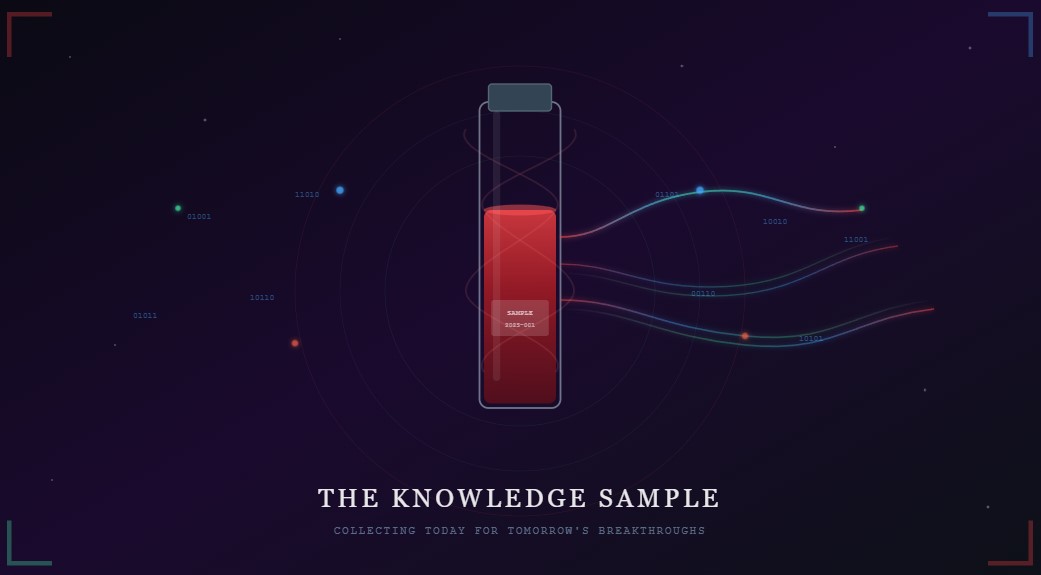
- Details
- Written by: peoplemachine
- Category: AI / Technology
- Hits: 719
Somewhere inside your organization, right now, a person is carrying a universe in their head. They know why that contract was structured the way it was in 2019. They know the workaround for the system that nobody ever fixed. They know which vendor will fold under pressure and which one will come through at 2 AM on a Saturday. And one day, perhaps soon, that person will retire. Or get recruited. Or simply decide they've had enough. When they walk through that door for the last time, everything they know walks out with them. Permanently. Irretrievably. Like a language that dies with its last speaker.
This is not a theoretical problem. This is happening right now, in real organizations, at a speed that should alarm anyone who has ever uttered the phrase "institutional knowledge." And here is the really uncomfortable part: we possess the means to stop it. We just keep choosing not to.
Read more: The Knowledge Sample: Why Your Organization's Unrecorded Expertise Is a Ticking Time Bomb
Write comment (0 Comments)