

- Details
- Written by: peoplemachine
- Category: Life / Spirituality
- Hits: 1828
Let’s be honest: the people we marry, date, or otherwise tether our Netflix password to do strange things.
My partner, for instance, buys broken 1970s film cameras and resurrects them like tiny plastic Lazaruses. On Friday nights, while most normal humans tap “Next Episode,” our living room morphs into a surgical theater of micro‑screwdrivers and acetone. At first I called it “the Grease‑Monkey Dark‑Room Situation” and felt mildly robbed of couple time.
Then something odd happened. I realized her late‑night lens polishing wasn’t stealing anything; it was offering something—an invitation into a bigger version of me. Welcome to the concept psychologists call self‑expansion. Buckle up; we’re going under the psychological hood and sprinkling in a bit of tech‑nerd spice, because that’s how we roll at TechGadgetHub.
Write comment (1 Comment)
- Details
- Written by: peoplemachine
- Category: Life / Spirituality
- Hits: 1738
Why Tech Readers Should Care
Silicon Valley CEOs talk about a coming “digital god,” physicists publish on the simulation hypothesis, and large‑language models now draft code and legal briefs. Ideas once locked in theology—omniscience, creation, moral law—have slipped into tech journalism and venture‑capital decks.
This article distils the core argument of an upcoming book, From AI to Ωmega, and shows why anyone who follows artificial‑intelligence roadmaps should at least re‑visit the classical Christian claim: behind all code and qubits stands an ultimate, personal Super‑Mind.
- Details
- Written by: peoplemachine
- Category: Life / Spirituality
- Hits: 1514
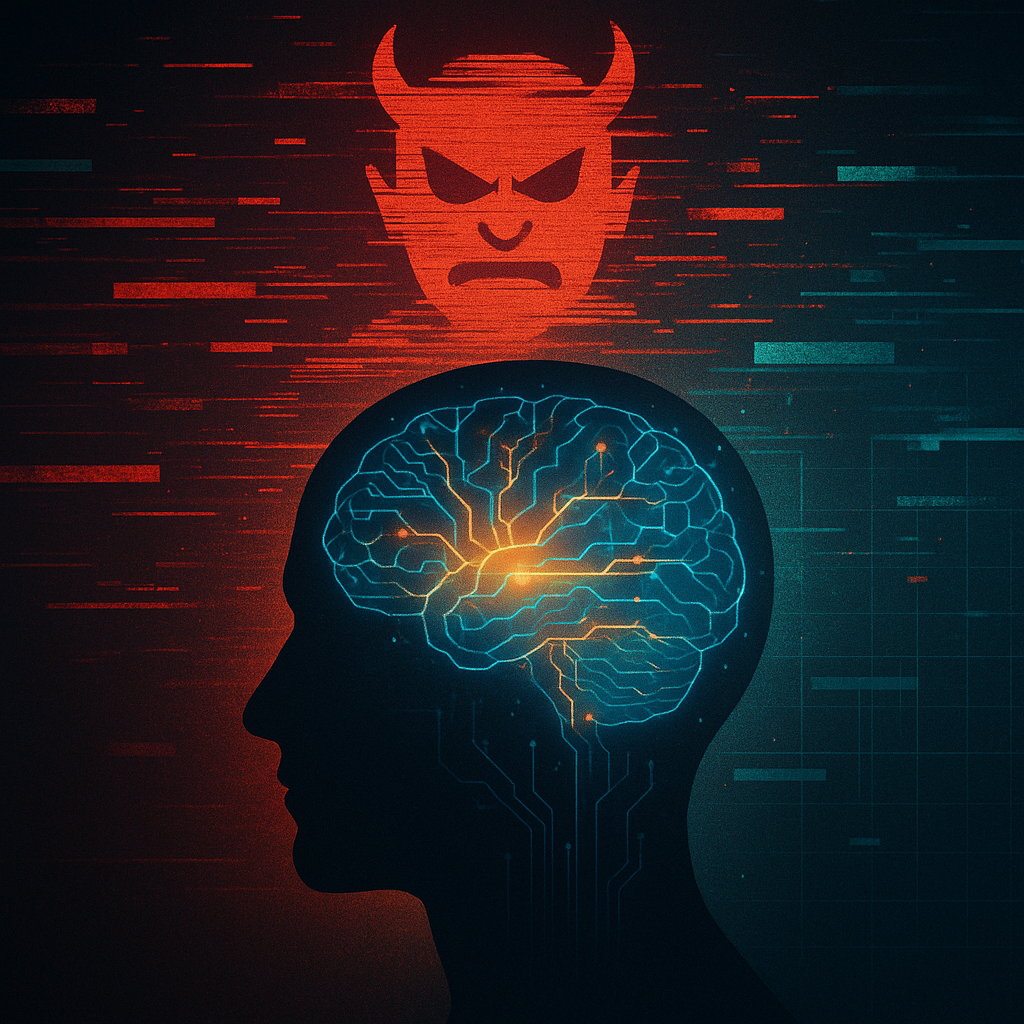
1. Evil’s Modern Playbook – Psychological Warfare of the Soul
When most people picture “the devil,” they imagine lurid temptations to lust, greed, or violence. Yet the far subtler—and far more successful—tactic is an invisible siege inside the mind.
-
The “useless” believer. If Satan can leave a person anxious, bitter, hopeless, or chronically doubtful, that person’s light is dimmed. Their gifts lie dormant, their influence shrinks, and they become, in the words of C. S. Lewis, “a patient … who is permanently crippled.”
-
The internal locus of attack. Because the battle sits between our ears, blaming politics, employers, or algorithms misses the point. What matters is the thought‑stream itself—what we allow to loop, replay, and take root. Screwtape’s counsel to his nephew demon rings true: major sins are optional; small irritations, scrolling distractions, and nagging fears work just as well.
“It is funny how mortals always picture us as putting things into their minds; in reality our best work is done by keeping things out.”
— C. S. Lewis, The Screwtape Letters
2. Mind–Body Circuitry – When Thoughts Hack Your Biology
Theology calls it spiritual oppression; medicine calls it psychoneuroimmunology. Both describe the same chain reaction:
| Stage | Spiritual Framing | Scientific Corollary |
|---|---|---|
| 1. Chronic fear, despair, bitterness | “Fiery darts” (Eph 6:16) aimed at the mind | Persistent stress perception |
| 2. Hormone surge | Inner turbulence | Flood of cortisol and adrenaline |
| 3. Immune suppression | Spiritual exhaustion | Natural‑killer cells reduced; antibodies drop |
| 4. Systemic inflammation | Spiritual rot | Elevated cytokines → heart disease, arthritis, some cancers |
| 5. Physical breakdown | “Death at work in us” (2 Cor 4:12) | Fatigue, infection, tumor growth |
In plain code‑security terms, negative thought loops are malware scripts; cortisol is the runaway process that drains resources; inflammation is the overheating CPU that shortens component life.
3. The Fall, Entropy, and Cellular Rebellion
Genesis portrays a world originally bug‑free—no decay, no death. Humanity’s disobedience introduced a systemic vulnerability:
-
Perfect creation – flawless design specs.
-
The Fall – the first unauthorized root‑level change; entropy enters the build.
-
Cancer as metaphor – cells forget their design, replicate chaotically, hijack nutrients, and ultimately kill their host. Sin works the same way in communities and souls.
Romans 5:12 frames disease not as an isolated glitch but as fallout from that primeval breach of contract: “Through one man sin entered the world, and death through sin.” Humanity’s spiritual rebellion echoed downward into genetic corruption, ecological imbalance, and every form of physical disorder.
4. Rebooting with Faith – Hope as a System Patch
If corrosive thoughts can make us sick, can faith‑filled thoughts help us heal? Christian tradition, as well as a growing body of mind‑body research, answers yes.
-
Peace that surpasses understanding (Phil 4:7) lowers cortisol, steadies heart rate variability, and boosts immune markers.
-
Prayer and meditation increase prefrontal‑cortex activity (executive control) while dampening the amygdala (fear center).
-
Forgiveness practices reduce inflammatory markers such as interleukin‑6.
-
Miracles – sometimes divine intervention rewrites corrupted code outright. Other times, alignment with God’s “original spec” removes the stressors so biology can self‑repair.
In tech language, faith is not a cheat code that ignores physics; it is a firmware patch that restores factory settings the moment the device reconnects to its original network.
5. Practical Defensive Programming for the Soul
Below is a concise “security checklist” any reader of TechGadgetHub can implement:
| Daily Action | Spiritual Intent | Neuroscience Benefit | Tech Analogy |
|---|---|---|---|
| Morning scripture / affirmations (5 min) | Load truth into RAM before falsehoods arrive | Sets emotional baseline; primes optimism | Boot‑time secure‑boot |
| Focused prayer or meditation (10 min) | Establish encrypted channel with HQ | Shifts brainwaves from beta to alpha/theta | VPN to trusted server |
| Gratitude journaling (3 items) | Counteract bitterness with praise | Increases dopamine/serotonin | Anti‑spam filter for negative thoughts |
| Digital Sabbath blocks (e.g., 9 pm–7 am) | Reject constant distraction | Lowers nighttime cortisol, improves REM | Firewall schedule |
| Confession & forgiveness loop | Release guilt, cut resentment | Reduces rumination; lowers inflammation | Garbage‑collection routine |
6. Conclusion – Spiritual Cyber‑Security in a Connected Age
The ultimate conflict is between God’s perfect order and Satan’s drive for disorder.
The primary battlefield is the human mind.
The weapon of evil is an exploit that seeds anxiety and despair, prompting us to sabotage our own hardware.
The weapon of good is faith‑driven peace that realigns spirit, mind, and body to their original design, sometimes unleashing what we call healing or miracle.
In cybersecurity, the best defense is layered: antivirus, firewalls, zero‑trust protocols, user education. Likewise, spiritual resilience requires layered practices—scripture, prayer, community, and disciplined thought life. Ignore any one layer and malware finds a way in.
So the next time you feel inexplicable fatigue, despondency, or cynicism, don’t just blame bad luck or the latest doom‑scroll. Pause, scan the internal battlefield, and push the mental reset. The greatest lie of evil is that you are powerless; the greatest truth of faith is that the battlefield lies within reach—one thought, one prayer, one software patch away from victory.
Stay vigilant, stay hopeful, and keep your spiritual firmware up to date.
Write comment (0 Comments)